
About this service
Some people experience sound, movement, touch, smells and other sensory input differently. This may affect their behavior, attention and everyday life.
When might this service help?
- Significant distress from sounds or covering the ears.
- Avoiding certain clothes or textures.
- Distress during haircuts or nail trimming.
- Avoiding certain food textures.
- Constant movement and jumping, or a strong fear of movement.
- Frequently bumping into things or difficulty sitting and focusing.
How do we work with you?
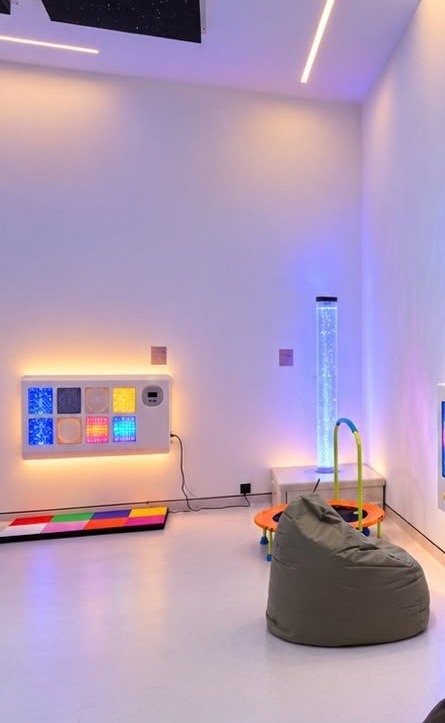
Sensory needs are assessed and a program is designed to help regulate responses to stimuli and improve participation in everyday activities. The center has an equipped sensory room used for specific therapy goals.
A specialist determines whether the service is appropriate based on assessment and individual needs.